
The Biologist's Take • Greenlii Lawn & Landscape
Winter is hedge season in the Okanagan. The leaves are down, growth has stopped, and it's the best time of year to deal with the hedge you've been ignoring. But before you — or anyone you hire — takes a saw to it, there's one question that decides whether the hedge comes back in spring or stays wrecked forever: what species is it?
The one rule: green wood vs. brown wood
Every hedge is either green wood or brown wood. Green wood is alive — it carries buds that can push new growth. Brown wood is old, leafless interior growth. On some species, cutting back to brown wood is fine. On others, it's permanent. The brown never greens up again. That's the whole game.
The ones that love a hard cut
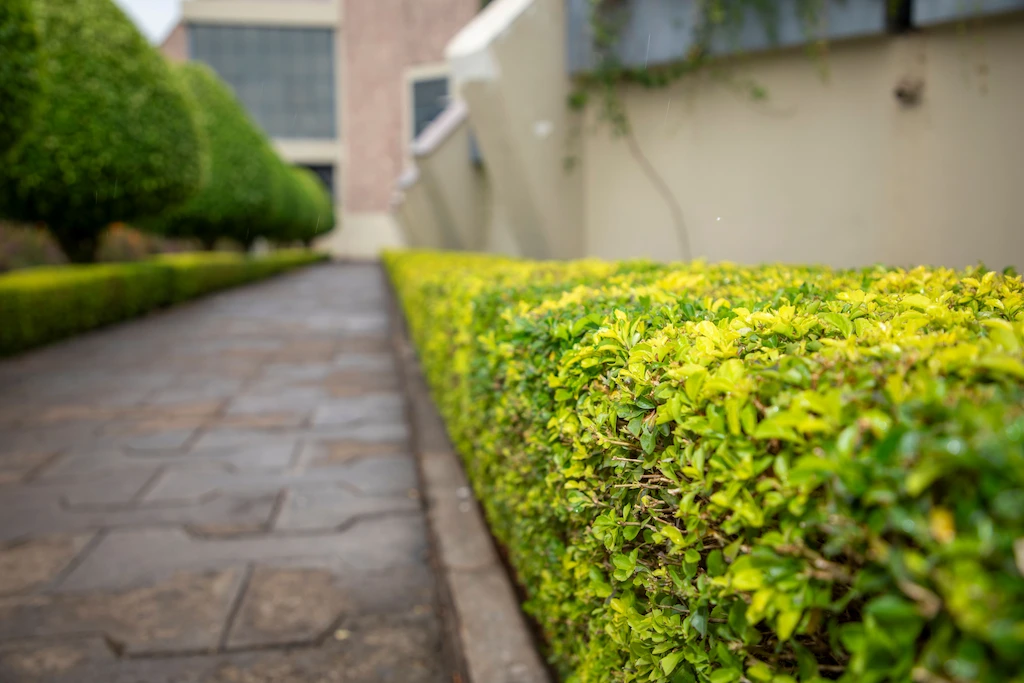
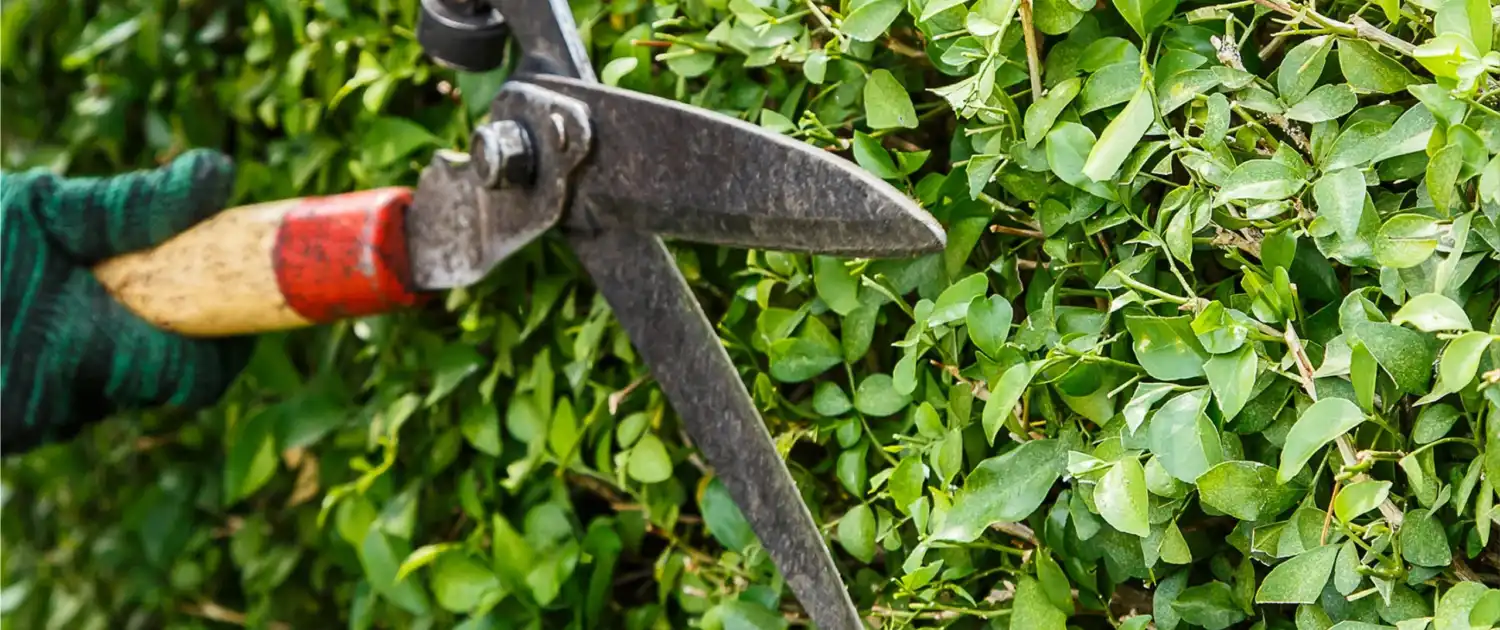
Deciduous hedges are built for this. Privet, lilac, ninebark, red osier dogwood, forsythia, spirea, beech, hornbeam — cut them back hard in late winter and they come roaring back in spring, thicker than before. They carry dormant buds all along their stems, just waiting for the signal. Yew is the one conifer that plays by the same rules — it will resprout from old wood where almost no other evergreen will.
The ones that don't — especially cedar
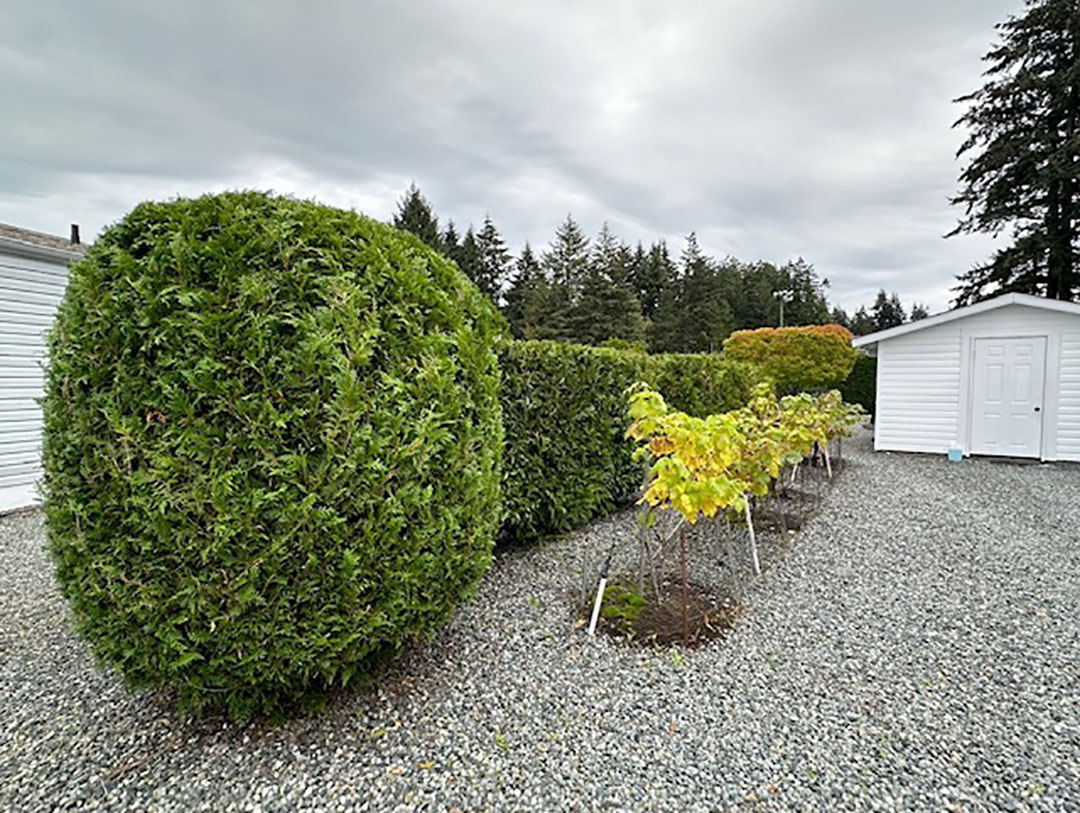
And then there's cedar. Western red cedar and eastern arborvitae are the most common privacy hedges in the Okanagan, and they are the least forgiving. Cut a cedar back past the green into bare brown wood and that face stays brown. Forever. No amount of water, fertilizer or waiting brings it back — there are simply no buds there to wake up. Same for juniper, Leyland cypress, spruce, fir and pine.
Western red cedar is a little more forgiving than Leylandii if there's still green behind the cut, but brown-through wood never recovers. If a cedar has grown so wide that the green zone is thin and the size you want is deep in the brown, the honest answer is usually removal and replant — not a reduction. Any contractor who promises to just cut it back without checking the green first is guessing with your hedge.

Timing matters too
Late winter is the sweet spot — February into March, once the worst cold has passed but before buds break. Fresh cuts in deep mid-winter cold can die back. One more thing: a hard cut on spring bloomers like lilac and forsythia costs you that spring's flowers. Worth it for a hedge that needs a reset, but go in knowing.
Not sure what's growing in your yard?
If you're not sure what's in front of you, that's exactly what the quote is for. We identify the species, check the green, and tell you straight whether it's a renovation, a staged reduction over two seasons, or a removal.
Free quotes: visit greenlii.com or call 1-84-GREENLII. Serving Coldstream & Vernon, BC.
— Kevin Christie, Greenlii Lawn & Landscape, Coldstream & Vernon, BC