

September 30, 2026FireSmart landscaping with native, drought-adapted plants
As a biologist, I spent years working across BC, in nearly every region and ecosystem the province has, from coastal rainforest to interior grasslands, and on construction sites making sure development respected the land it was built on. I'm a former member of the College of Applied Biology and the BC Institute of Agrologists, I've completed FireSmart Home Assessment training, and these days I run Greenlii Lawn & Landscape here in Coldstream. That mix gives me a particular view of our yards: most Okanagan landscapes are fighting the climate they're planted in.
We live in a dry place, and our yards don't show it
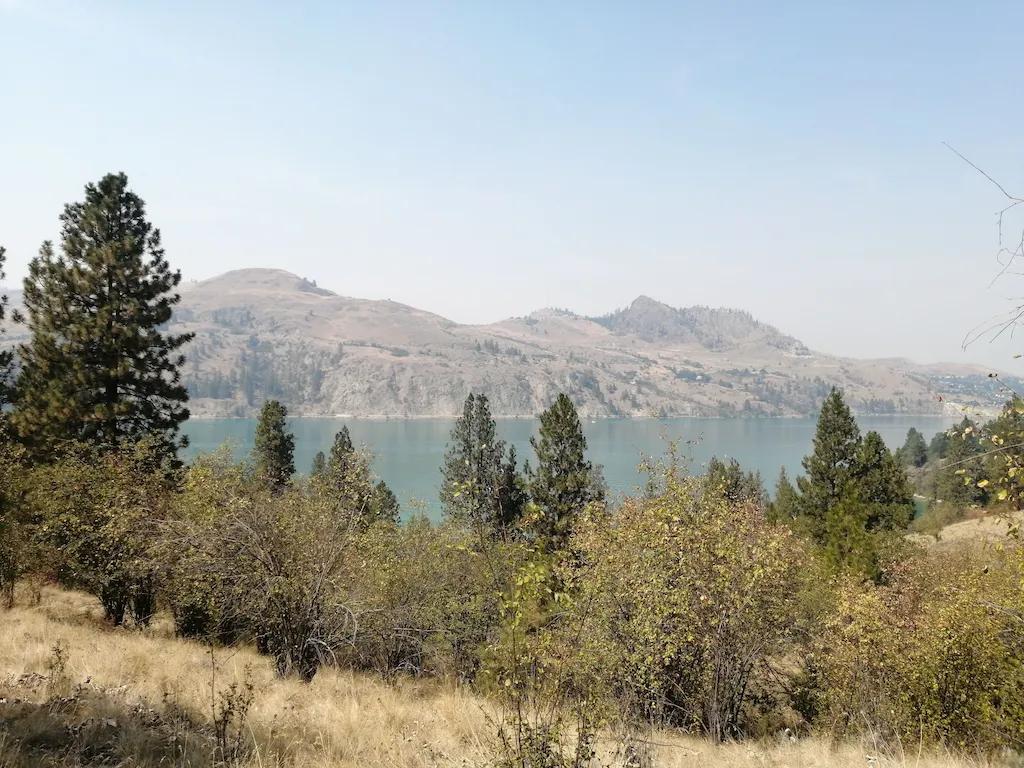
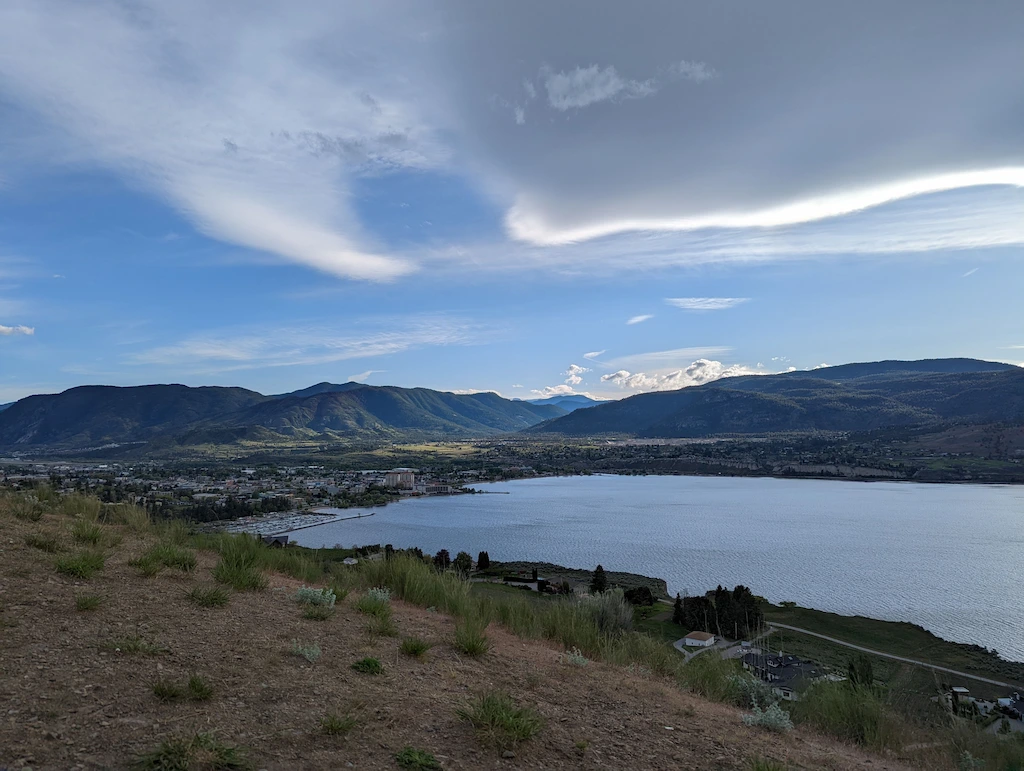
Depending on where you are in the valley, we get roughly 300 mm of precipitation a year in the south to about 400 mm here in the North Okanagan. The Lower Mainland gets three to four times that. Yet many of us plant as if we lived in Vancouver.
The numbers are sobering. The Okanagan has the lowest per-person water supply in Canada, and the average resident uses 675 litres of water a day, more than double the national average. Most of that goes outside: the average household uses 391 litres indoors and 641 litres outdoors per day, mostly in summer. Outdoor use spikes in April when the taps turn on for lawns and gardens, and continues into October.
Our real water bank is up in the mountains
Most of our water doesn't come from summer rain. It comes from winter snow in the hills above us. The mountain snowpack acts like a slow-release bank account: it melts through spring and early summer, filling the creeks and upland reservoirs that supply many of our communities, and recharging Okanagan, Kalamalka and Wood lakes. When the snowpack is low, everything downstream is short.
This year showed how fragile that system is. The Okanagan's snowpack was only 58% of normal by April 1, with four local snow stations, including Oyama Lake, recording all-time lows. Silver Star Mountain also hit a record low for snow water equivalent. By mid-May, the regional snowpack had fallen to just 16% of normal. The province rated the Okanagan at Drought Level 5 in late May, the highest on its scale and the only region in BC that high, and warned that many local reservoirs wouldn't fill to normal levels this year.
This isn't a one-off. The Okanagan Basin Water Board points to years of below-normal precipitation and low snowpack. Our big lakes create what one local water expert calls a "myth of abundance." They look like plenty, but they don't reflect what's actually coming off the mountains each year. So every litre we pour onto a thirsty lawn in July is drawn from a reservoir that may not have filled in spring. Choosing plants that don't need that water is one of the most direct things a homeowner can do.
Xeriscaping isn't a rock yard
When people hear "xeriscape," they picture a front yard of landscape fabric and river rock with three lonely shrubs. That's not what I'm talking about. Rock heats up, reflects heat onto your house, and does nothing for pollinators or soil.
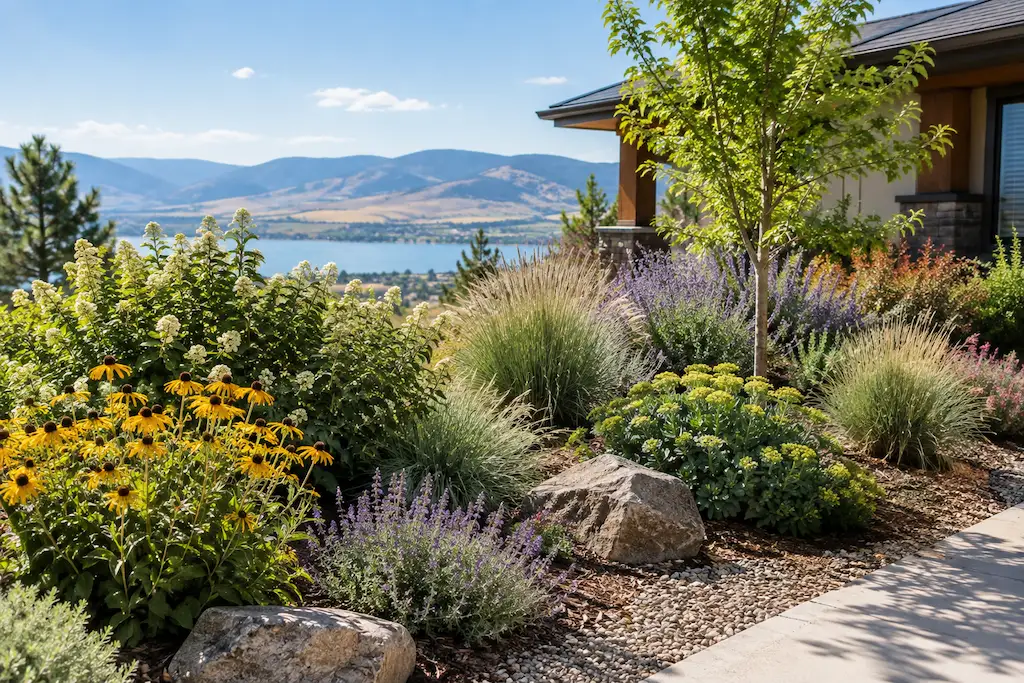
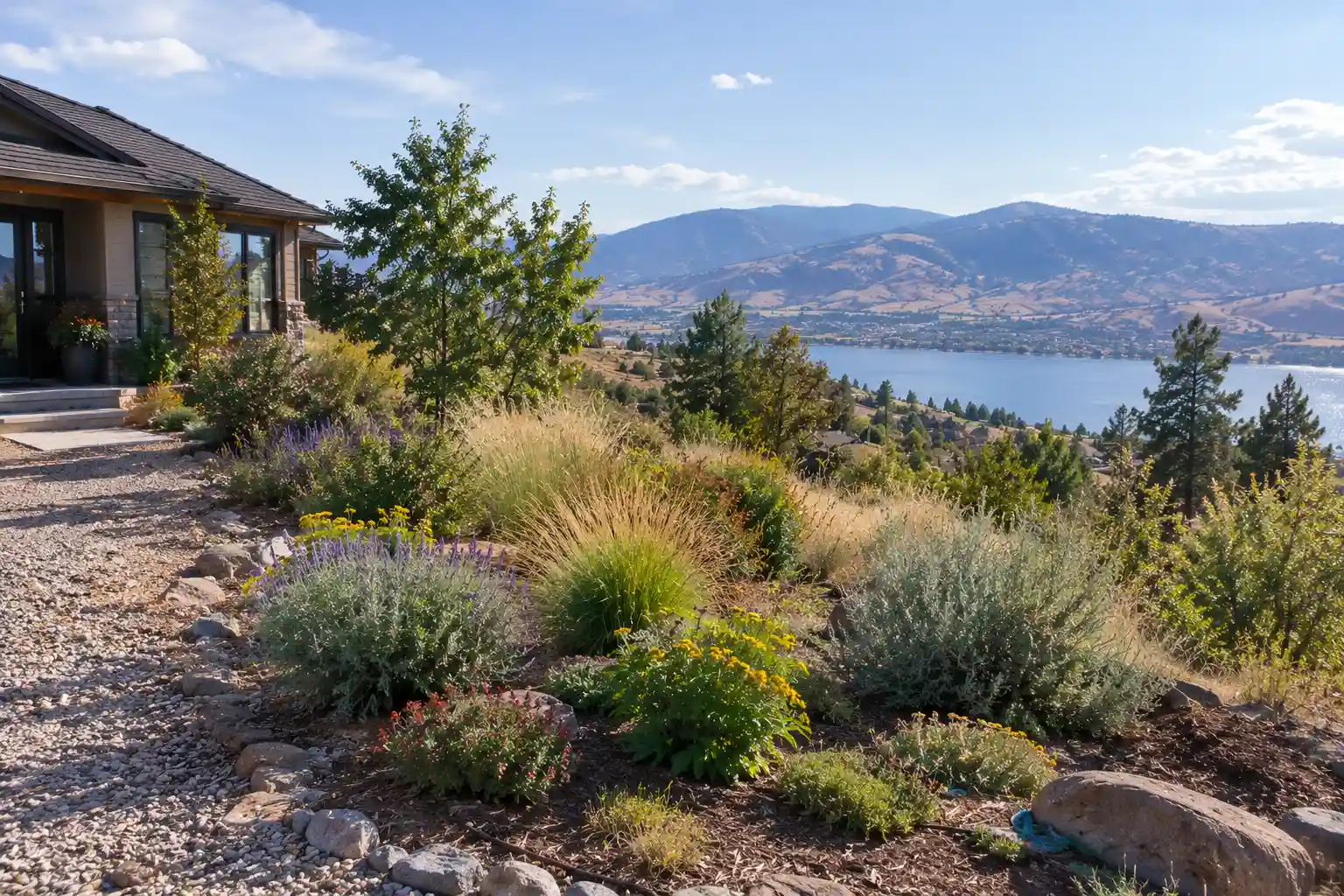
Real xeriscaping means choosing plants that evolved for exactly the conditions we have: hot, dry summers, cold winters, thin soils, and long stretches without rain. Our native grassland and dry-forest plants have spent thousands of years solving the problem we keep throwing hose water at. Deep taproots, fine silvery hairs, waxy or succulent leaves, and early-season bloom timing are all adaptations to drought. Once established (usually two or three seasons), many need little to no supplemental water.
Where FireSmart comes in, and where it gets nuanced
Here's something that surprises people: drought-tolerant and fire-resistant are not the same thing. Some of our most iconic dryland natives, like big sagebrush, antelope-brush, rabbitbrush and junipers, are loaded with aromatic oils and resins and burn hot. They belong in the landscape, just not next to your house.
FireSmart BC breaks your property into zones:
- 0 to 1.5 m (Immediate Zone): Non-combustible. Gravel, pavers, or bare mineral soil. No bark mulch, no shrubs against the siding. This is the one place rock makes sense. • 1.5 to 10 m (Intermediate Zone): Low-growing, high-moisture, low-resin plants, spaced so fire can't climb or travel.
- 10 to 30 m (Extended Zone): Thinned, limbed-up trees and your more resinous native shrubs, well spaced.
Native plants that do double duty
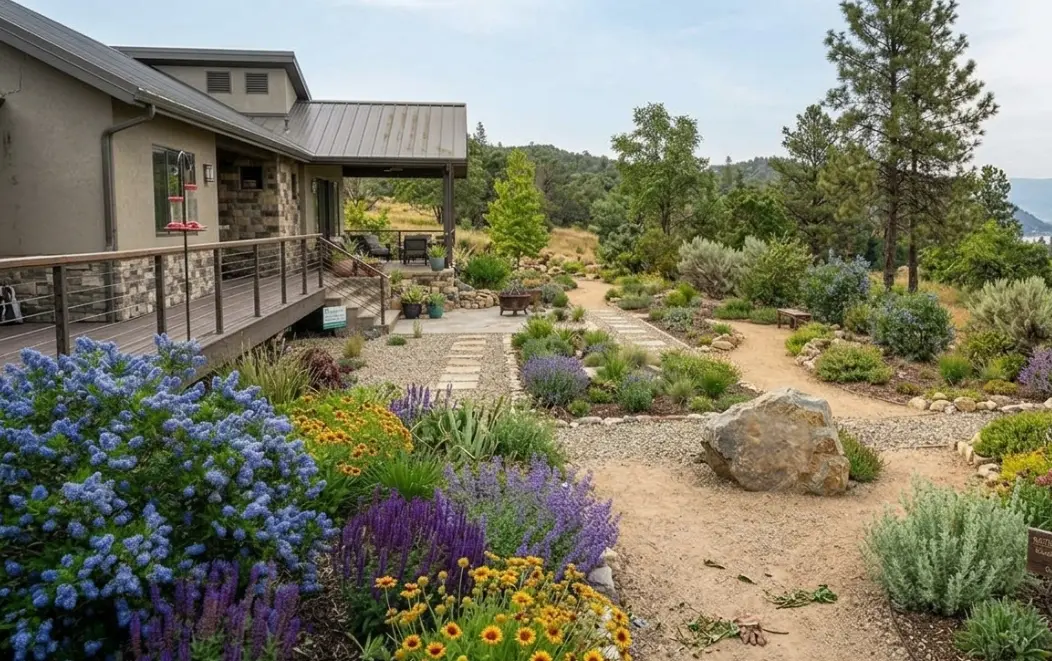
These are good fits for the Intermediate Zone: drought-adapted, low in resin, and beautiful.
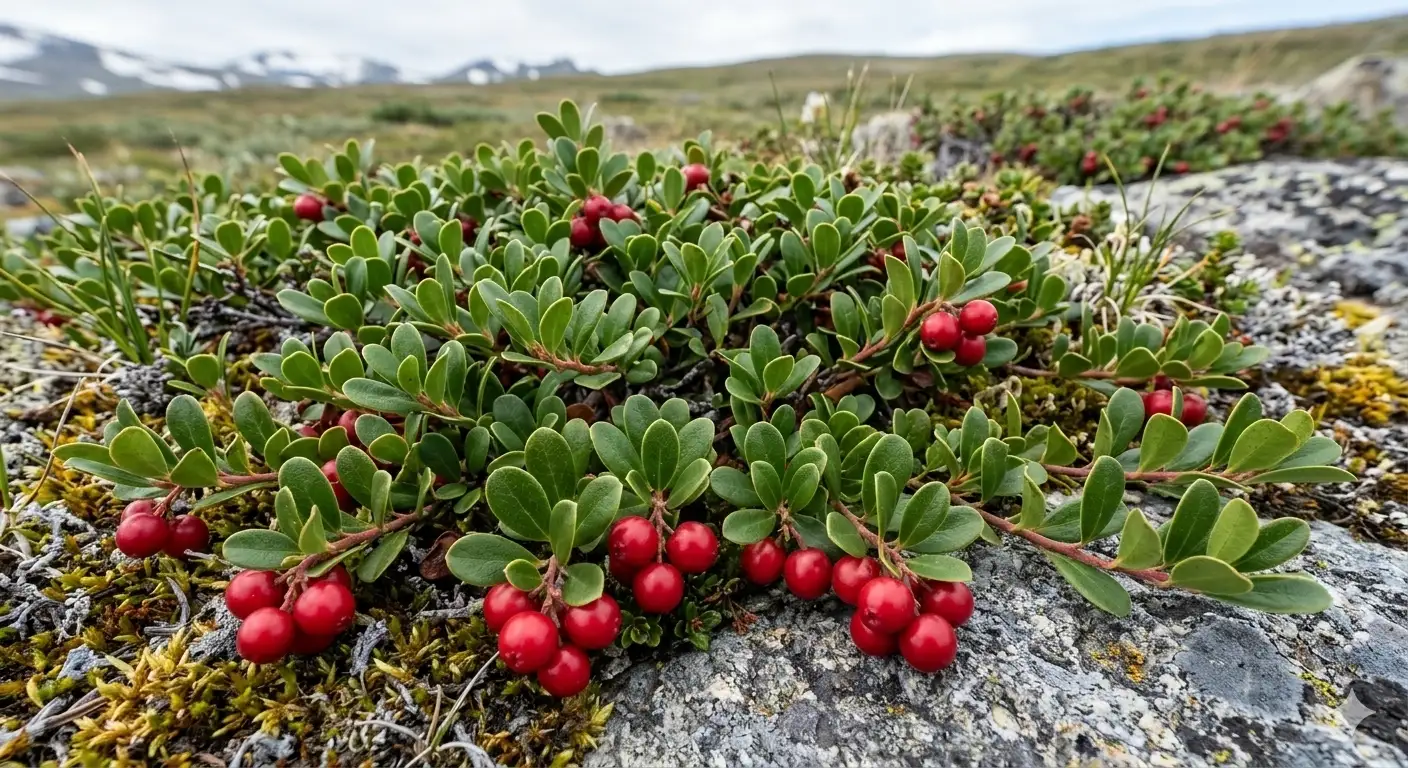
Kinnikinnick (Arctostaphylos uva-ursi): evergreen groundcover, pink spring bells, red berries for birds.
Lance-leaved stonecrop (Sedum lanceolatum): native succulent that holds moisture in its leaves.
Kinnikinnick (Arctostaphylos uva-ursi): evergreen groundcover, pink spring bells, red berries for birds.
Lance-leaved stonecrop (Sedum lanceolatum): native succulent that holds moisture in its leaves.
Arrowleaf balsamroot (Balsamorhiza sagittata): the yellow sunflower that lights up our hillsides in spring; deep taproot, summer-dormant.
Brown-eyed Susan / blanket flower (Gaillardia aristata): long bloom, loved by pollinators.
Sulphur buckwheat (Eriogonum umbellatum): tidy mounds, excellent for native bees.
Shrubby penstemon (Penstemon fruticosus): purple spring flowers, thrives on rocky slopes.
Yarrow (Achillea millefolium): tough, fast to establish, great near the house.
Bluebunch wheatgrass and Idaho fescue: our native bunchgrasses. Plant them in clumps with gaps rather than as a continuous mat.
Saskatoon, wax currant, mock orange and snowberry: deciduous shrubs with higher leaf moisture; good in the outer part of the Intermediate Zone, spaced apart.
Trembling aspen: one of the most fire-resistant trees we have, if you have room.
A few practical tips
Group plants by water needs so you're not overwatering drought-tolerant plants to keep a thirsty one alive.
- Use drip irrigation during establishment, then taper off.
- Keep mulch out of the first 1.5 m; beyond that, use it sparingly.
- Prune dead material and cut back dormant grasses before fire season.
- Buy from native plant nurseries. Local genetics matter.
A landscape that fits the Okanagan uses less water, supports pollinators and birds, stands up to heat, and can help protect your home from wildfire. It also just looks like it belongs here.
If you'd like help planning a FireSmart, water-wise yard with native plants, reach out to us at Greenlii Lawn & Landscape – Coldstream. I'm happy to walk your property and talk it through.