

In my last post, Plant Like You Live in the Okanagan, I walked through FireSmart BC's three zones around your home. This post zooms in on the one that matters most: the first 1.5 metres.
Most homes lost to wildfire are not swallowed by a wall of flame. They catch from embers — small burning pieces of bark, needles and debris carried ahead of the fire on the wind. In the 2023 fires around Kelowna, embers were blown about 2.5 km across Okanagan Lake. An ember lands against your siding, in a pile of leaves by the back step, or in a juniper by the foundation. That small fire then becomes a house fire.
FireSmart BC calls the strip from your walls out to 1.5 metres the Immediate Zone. Its goal is simple: give embers nothing to land on that can burn. It's also the cheapest, fastest zone to fix — and it's where I start every property walk.
The Immediate Zone checklist
Walk the full perimeter of your house with this list. Include attached decks, porches and fences — the zone wraps around those too.
On the ground
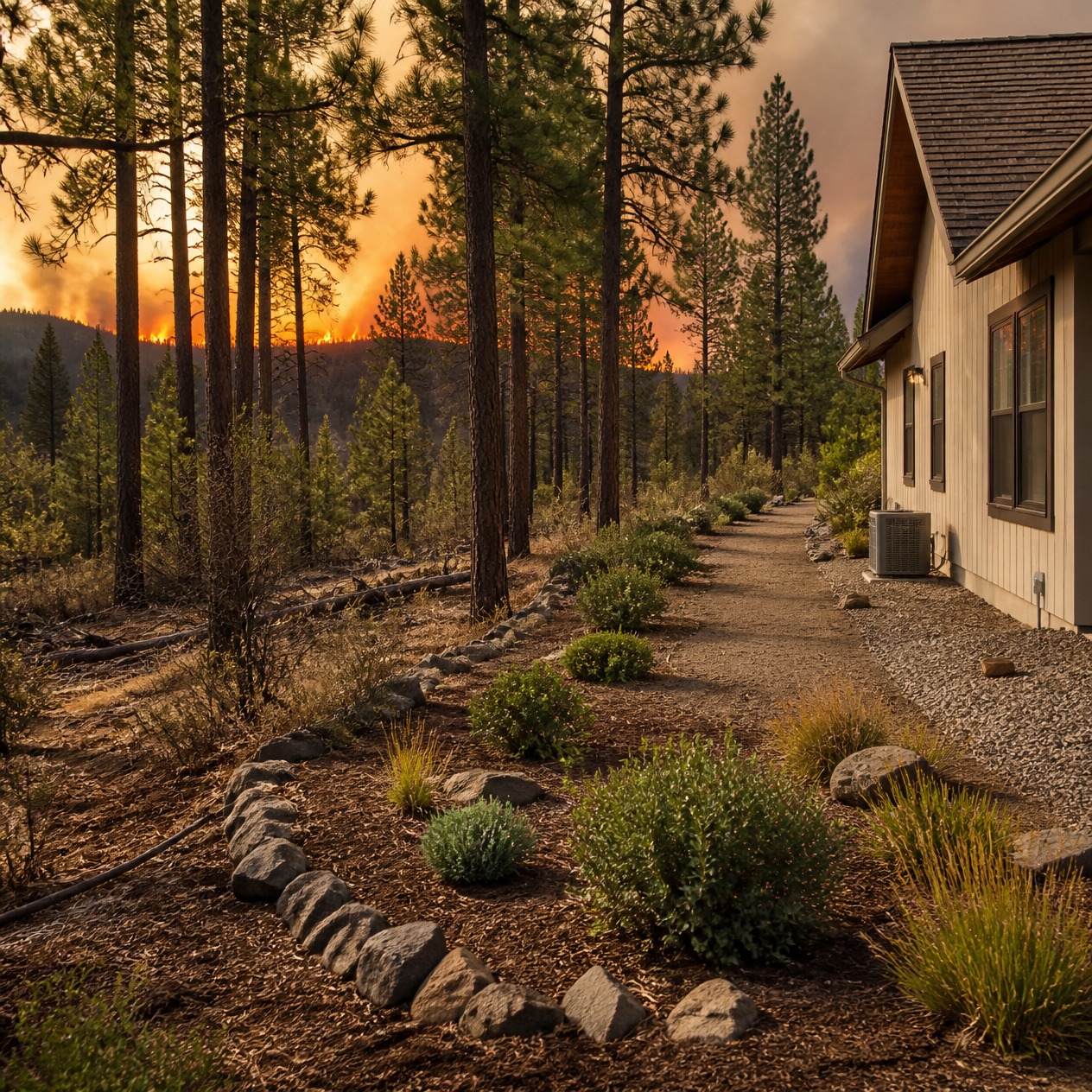
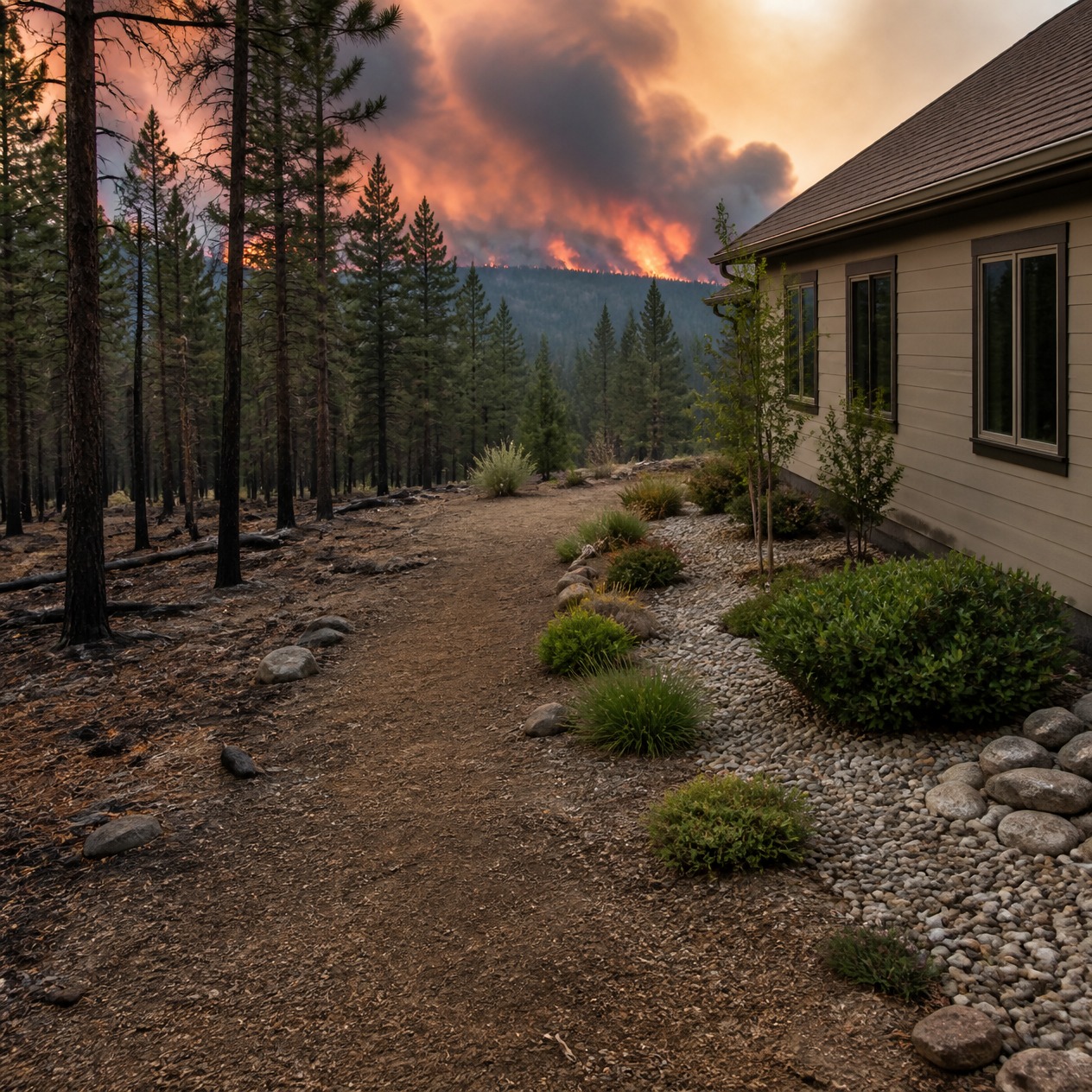
Non-combustible surface for the full 1.5 m, such as gravel, rock, pavers or concrete. This is the one place rock makes sense.
No bark mulch, wood chips or rubber mulch against the house.
No shrubs, hedges or tall grass in the zone. If you want green, keep it low, well-watered and spaced out.
No leaf litter or needles drifted into corners, window wells or under steps.
Against the house
Combustibles stored elsewhere during fire season: firewood, lumber, patio furniture cushions, doormats and recycling. Firewood belongs more than 10 m from the house.
Propane tanks and barbecues kept clear of anything that burns.
Trailers, RVs and sheds moved out of the zone — or parked on a gravel pad with 1.5 m of gravel around them.
Up high
Gutters and roof valleys clear of needles and leaves.
No tree branches hanging over the roof or into the zone.
Vents screened with 3 mm metal mesh so embers can't get inside the attic or crawlspace.
Decks and fences
Nothing stored under the deck. Ideally, enclose the underside with 3 mm metal mesh or skirting that doesn't burn.
A metal or masonry gap where a wooden fence meets the house. A cedar fence works like a fuse leading straight to your siding.
Two extras people often miss
Every detached garage or shop needs its own 1.5 m zone.
Slope: if your home sits on a slope, fire climbs uphill fast — so stretch your zones wider on the downhill side.
The usual suspects in Okanagan yards
These are the things I see against houses again and again in Coldstream and Vernon.
Cedar hedges. Dense, oily foliage and a build-up of dead needles inside make them one of the most flammable plants you can put near a house. A cedar hedge running up to the foundation or a wooden fence is a top priority.
Junipers. The low, spreading kinds are often planted right along the foundation. They're resinous, they hold dead material underneath, and they burn hot.
Bark mulch. It looks tidy, but dry bark mulch catches embers easily and smoulders. Swap it for gravel or rock inside the 1.5 m strip.
Ornamental grasses. By late summer, many are standing dry fuel. Keep them out of the Immediate Zone and cut them back before fire season.
Fall leaf piles. Leaves drift into the same corners embers do. If leaves collect somewhere, embers will too.
You don't have to rip everything out at once. Start at the walls and work outward, one side of the house at a time.
Why fall and winter are the best time for a FireSmart assessment
Most people think about wildfire in August, when the smoke rolls in. By then it's too late to do much. The off-season is when an assessment pays off most.
You can see everything. With the leaves down, the structure of trees and shrubs is clear. So are overhanging branches, gutters and roof valleys, and what's built up under the deck. The leaf litter collecting against your house shows exactly where embers would land.
It's the right time to cut. Late fall through winter is the dormant season, so pruning, limbing up trees and removing hedges stresses plants less. It also avoids bird nesting season in spring and summer, when active nests are protected under the BC Wildlife Act.
You have time to plan and budget. An assessment now gives you a prioritized list to work through over winter. Some fixes are a Saturday afternoon. Others, like replacing a hedge or regrading for a gravel strip, are worth pricing out.
You get the work done before fire season. Fire seasons are starting earlier, and this year the Okanagan hit Drought Level 5 by late May. Spring is also when landscapers book up. Getting on the schedule early means your Immediate Zone is finished before it's needed.
Planting timing works out. If you're replacing a cedar hedge or a foundation juniper, the fire-resistant natives from my last post can go in this fall or first thing in spring. That gives them a full season to establish.

How to Get Started
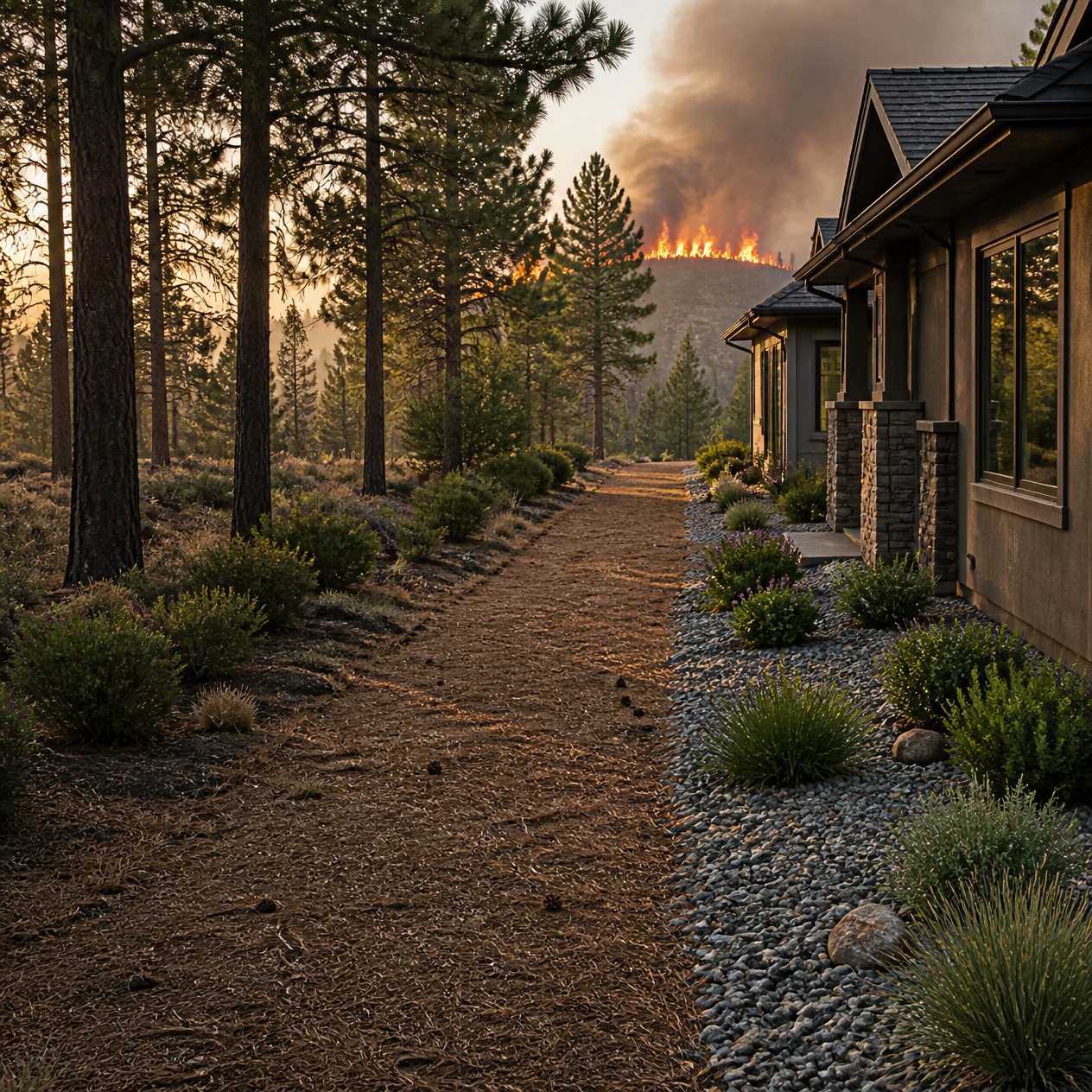
Book a free FireSmart assessment with us. I've completed FireSmart Home Assessment training, and I'll walk your whole property with you. That covers the Immediate Zone checklist above, your trees, and the slope and layout of your lot. You'll get a clear, prioritized list of what to fix first. There's no cost and no obligation.
Then we can do the work. My background is in biology and plants native to BC, so the plan goes beyond clearing things out. We can rebuild your Immediate Zone, remove or replace hedges and junipers, limb up trees, and replant with fire-resistant natives that suit the Okanagan.
Fall and winter assessment spots are open now. Call 1-84-GREENLII to book yours through Greenlii Lawn & Landscape, Coldstream — and let's get your yard ready before next fire season.
More free time, and the peace of mind to enjoy it!